Yo-E Ryou: Why I Swim
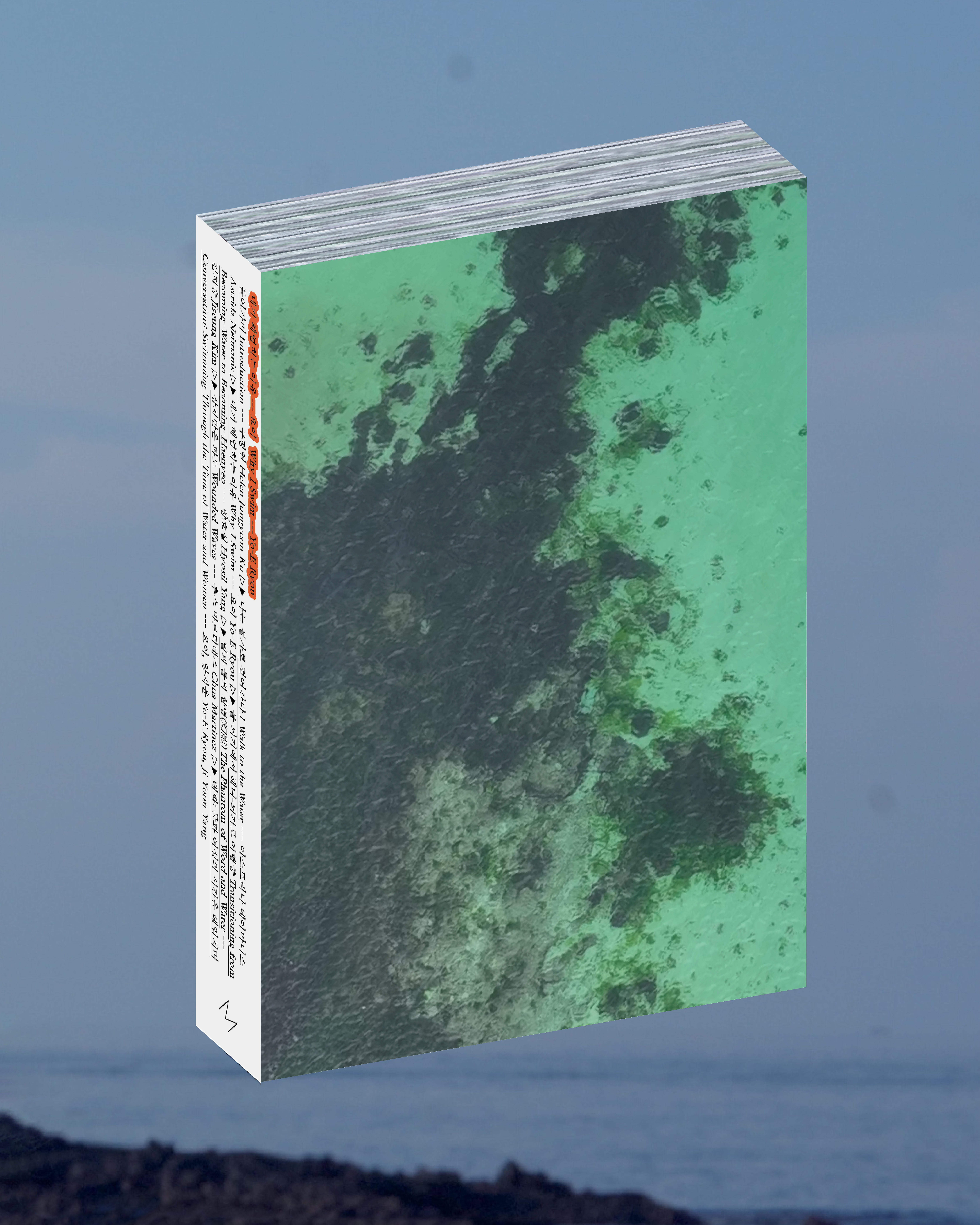
125 x 180 mm / 346 pages / Korean, English
ISBN 979-11-90434-72-0 03600
Texts by Astrida Neimanis, Chus Martínez ,Hyosil Yang, Ji Yoon Yang, Jiseung Kim and Yo-E Ryou
Edited by Yo-E Ryou, Helen Jungyeon Ku
Translated by Yo-E Ryou, Yewon Lee
English Supervision by Catherine Taft
Designed by Shin Shin
Printing & Binding by Intime, Seoul, Korea
Price: 22,000KRW
Introduction
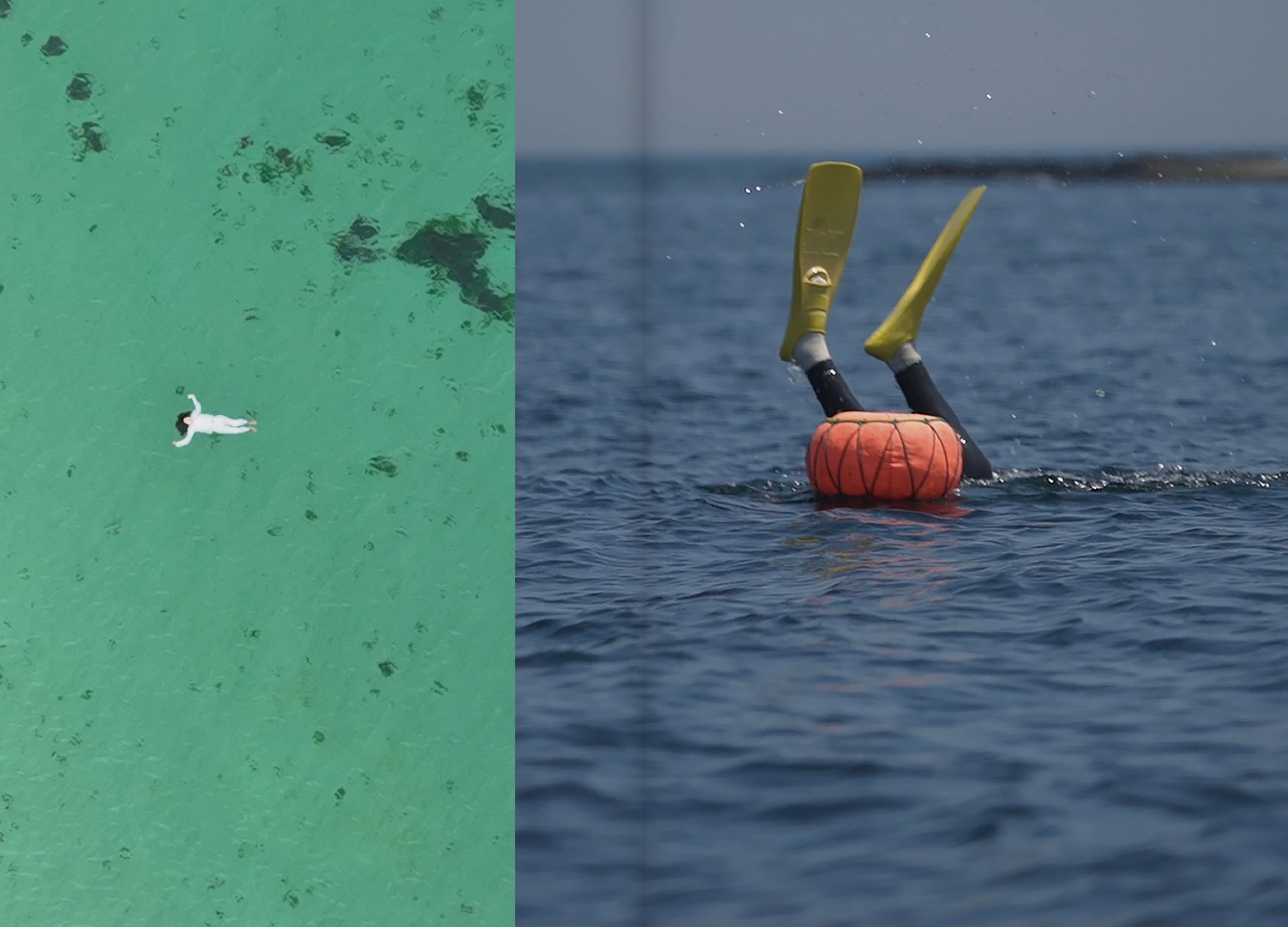
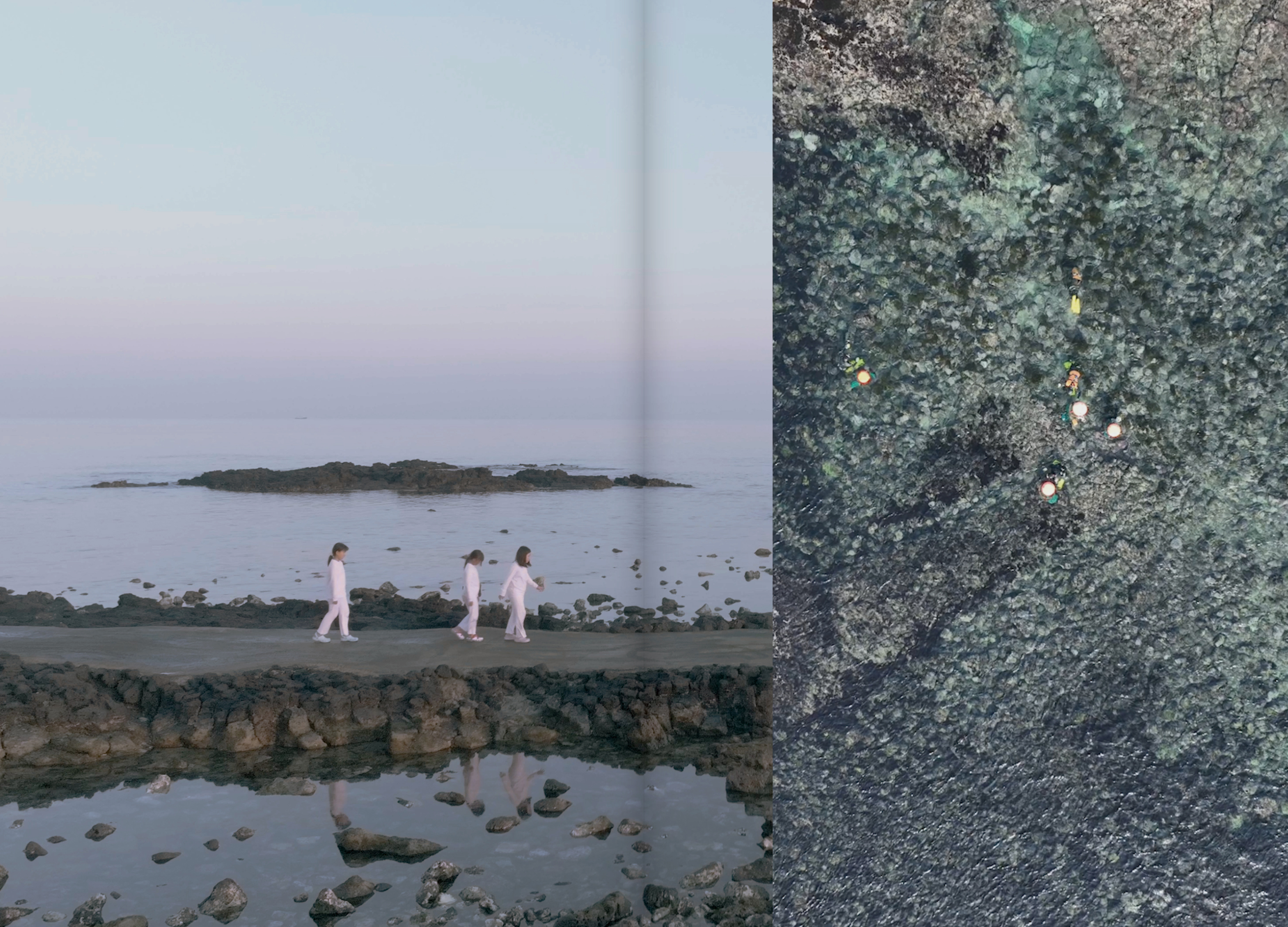
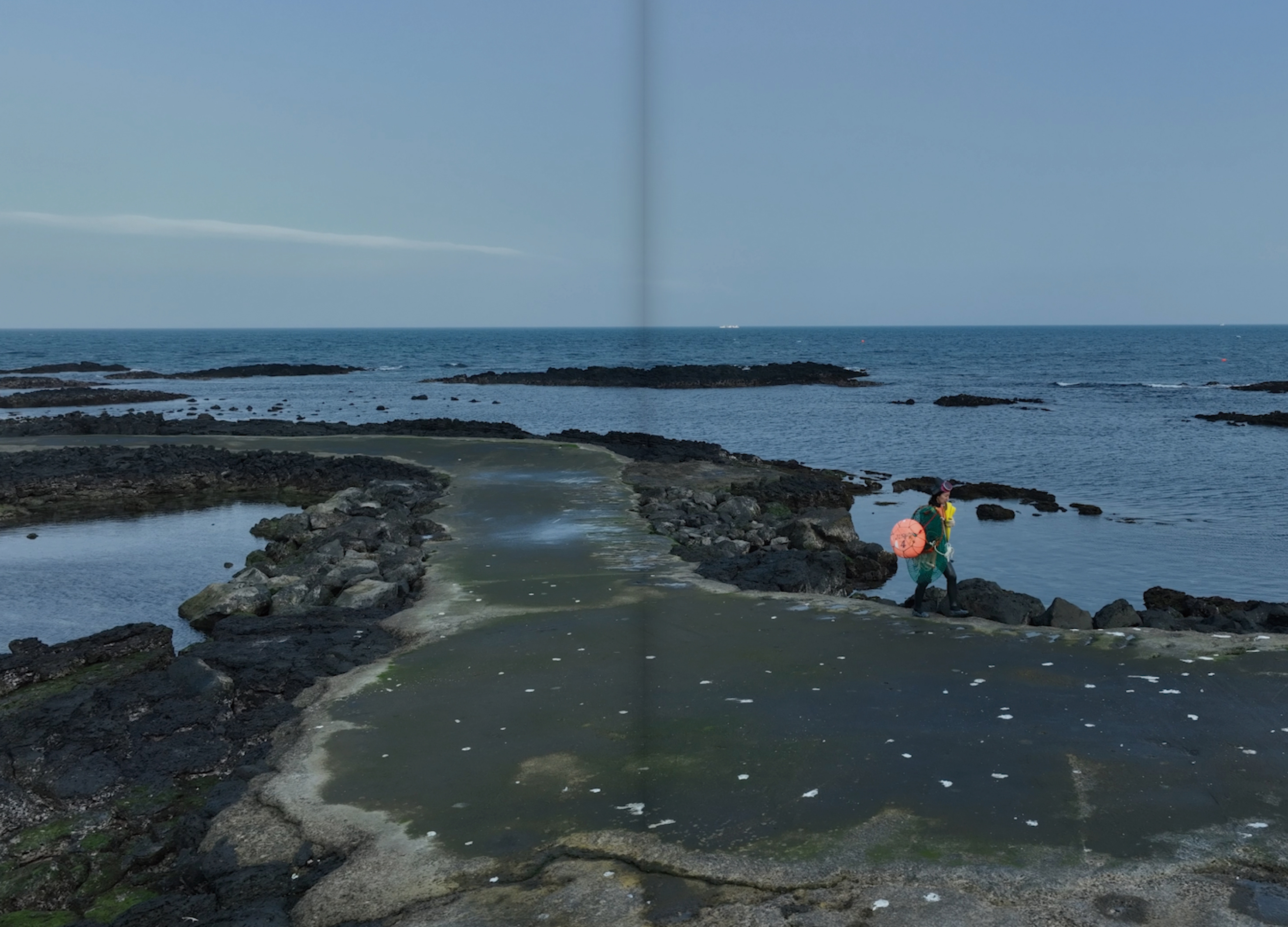
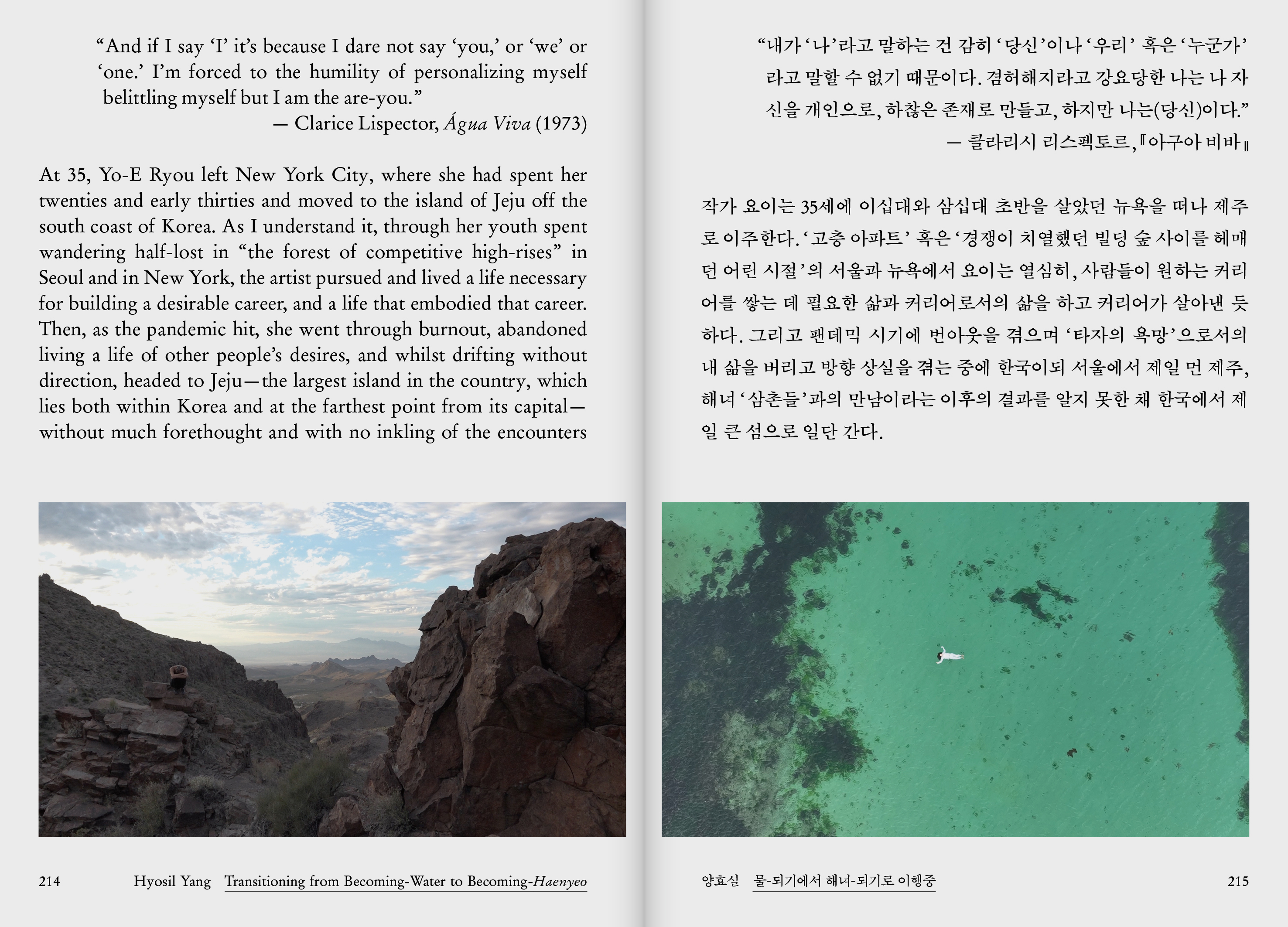
After years of living abroad, artist Yo-E Ryou returned to Jeju in 2021, where she began forging a new relationship with the sea—one stroke at a time. Having never learned to swim before, she immersed herself in the water, guided by the care and support of the Haenyeo diving community and the Haenyeo School. Over time, she not only learned to swim but also to dive, experiencing an entanglement of her own body with the body of water. Moving from land to sea, from vertical descent to the horizontal flow of the tides, she discovered a new way of being.
This book is a record of that journey. It reflects on the embodied time of water and the body, the lives of Jeju’s Haenyeo grandmothers, and the fading reality of their once-thriving community. It also explores the ‘language of water’—a knowledge passed down through breath, gesture, and memory. Alongside the artist’s reflections, invited authors offer their own perspectives on the sea, examining their personal and cultural connections to water in diverse and unexpected ways.
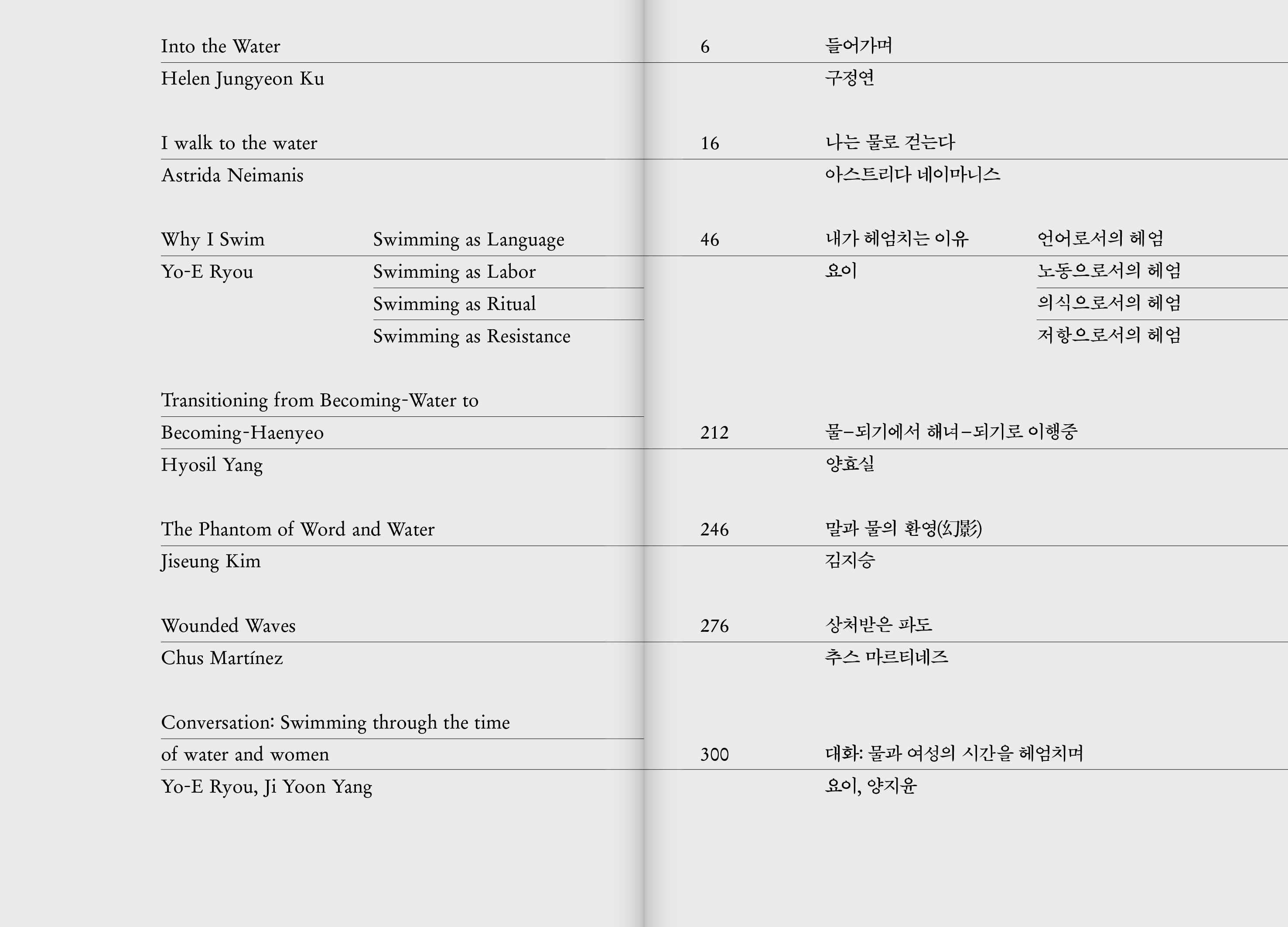
Contents
Introduction / Helen Jungyeon Ku
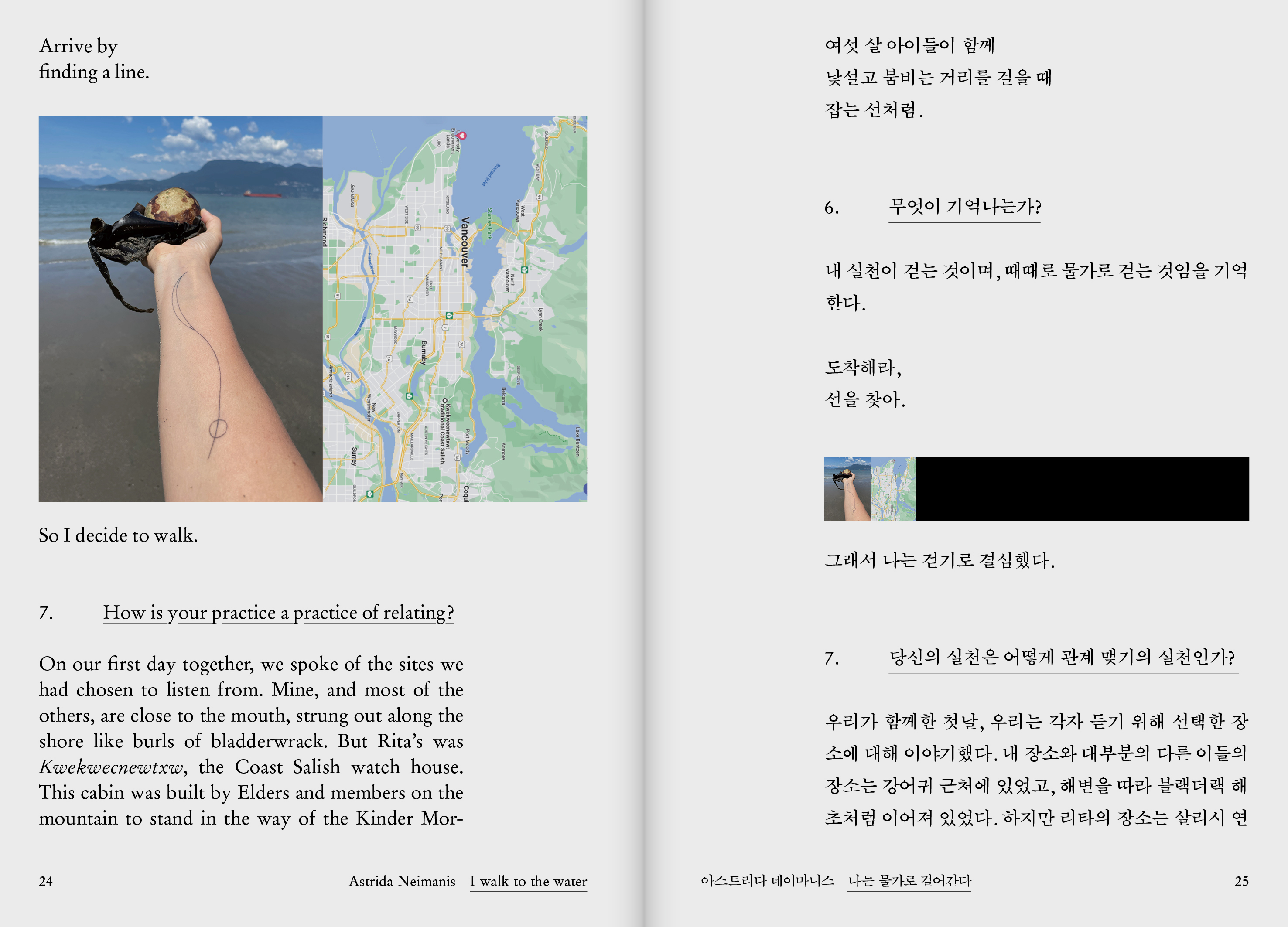
I Walk to the Water / Astrida Neimanis
Why I Swim / Yo-E Ryou
Swimming as Language
Swimming as Labor
Swimming as Ritual
Swimming as Resistance
Transitioning from Becoming -Water to Becoming - Haenyeo / Hyosil Yang
The Phantom of Word and Water / Jiseung Kim
Wounded Waves / Chus Martínez
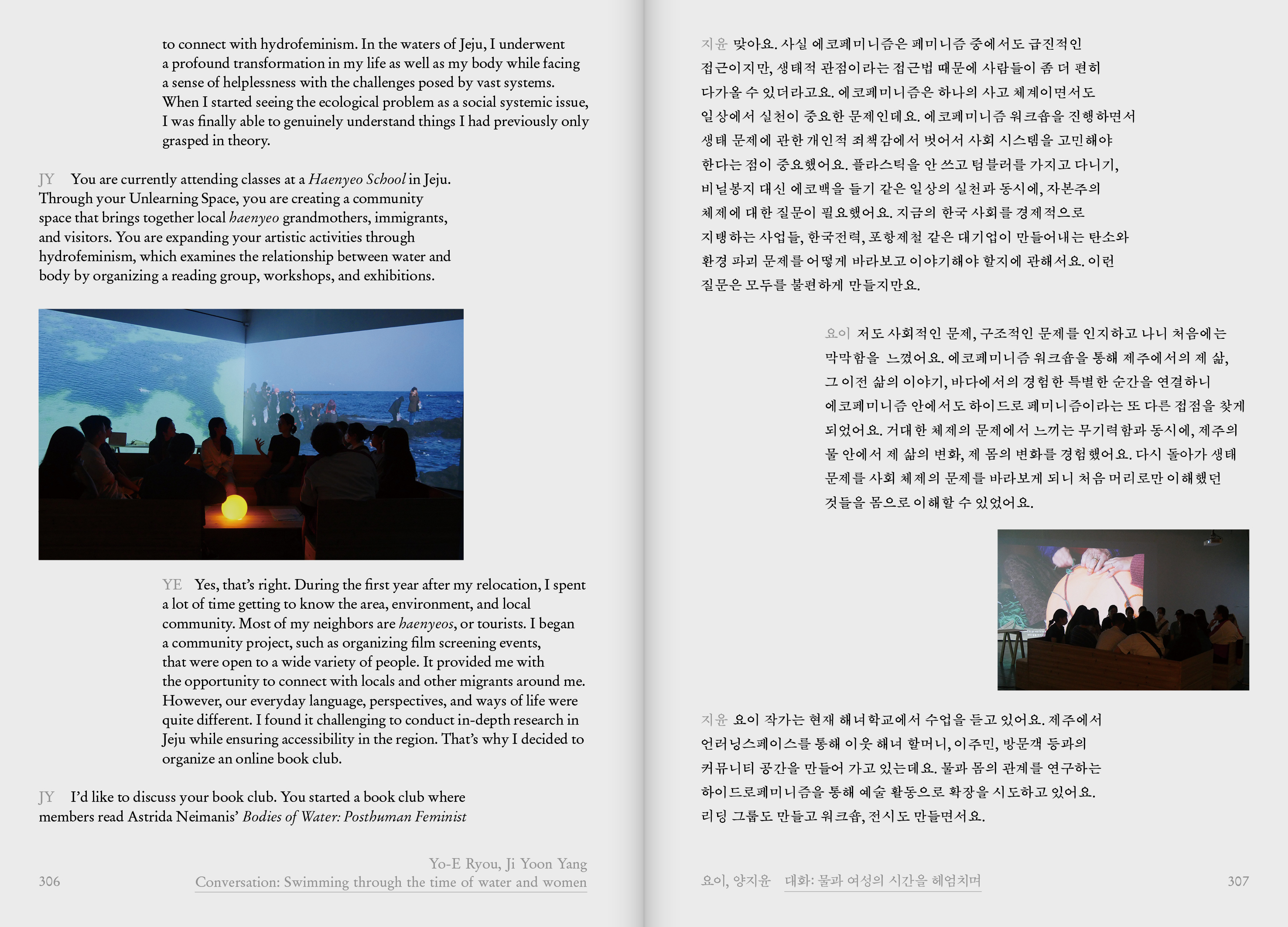
Conversation: Swimming Through the Time of Water and Women / Yo-E Ryou, Ji Yoon Yang
책 속으로
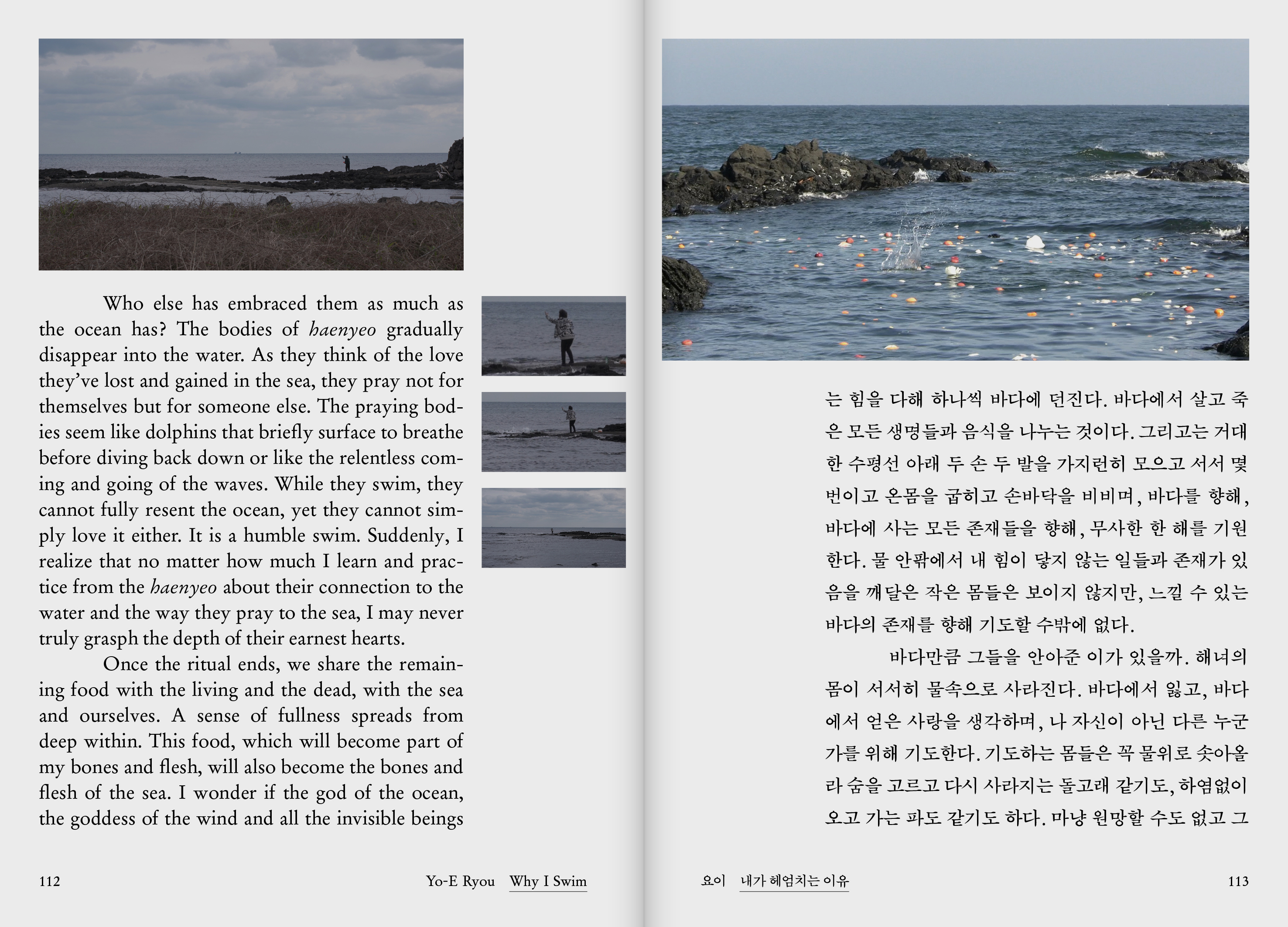
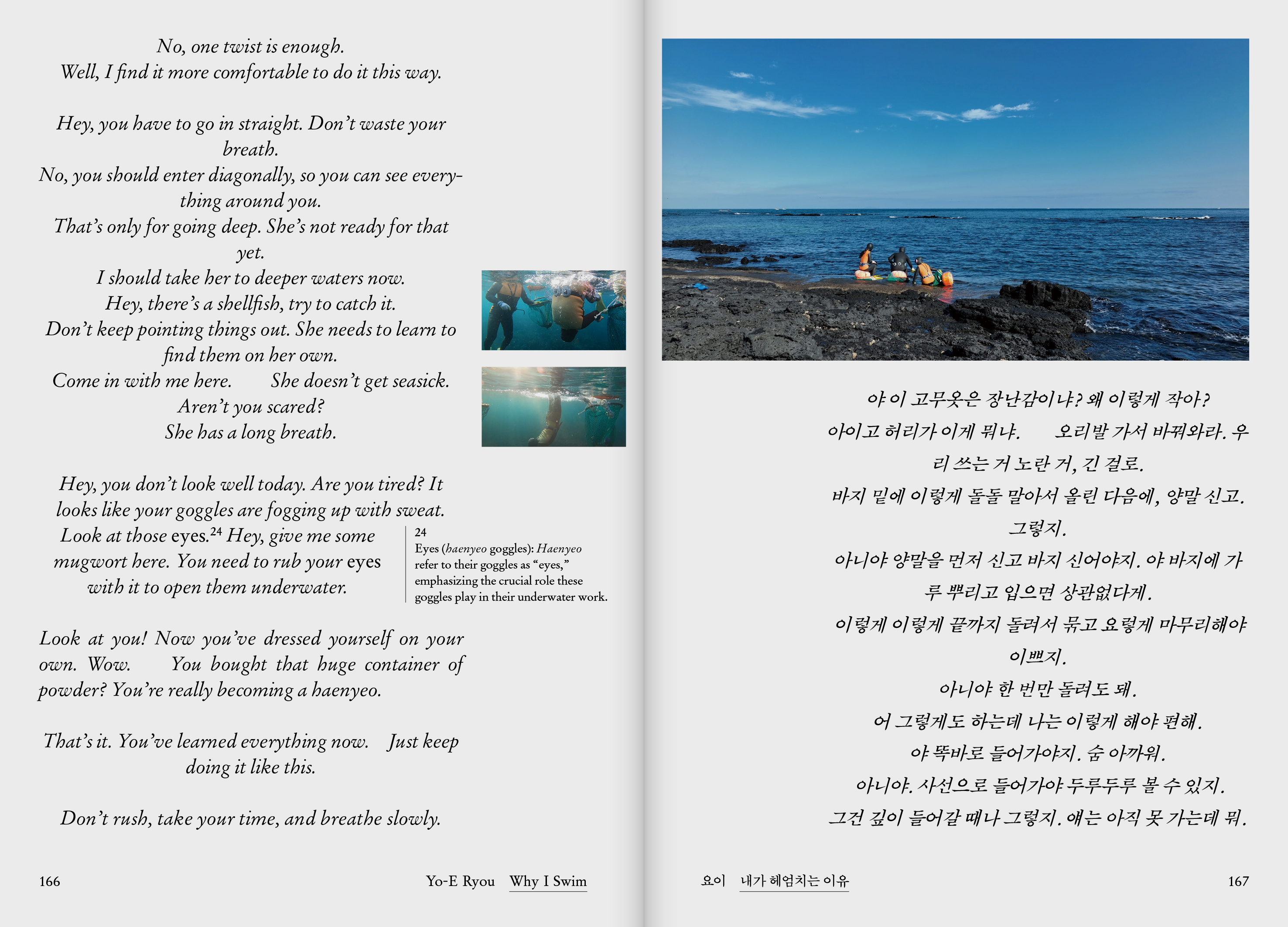
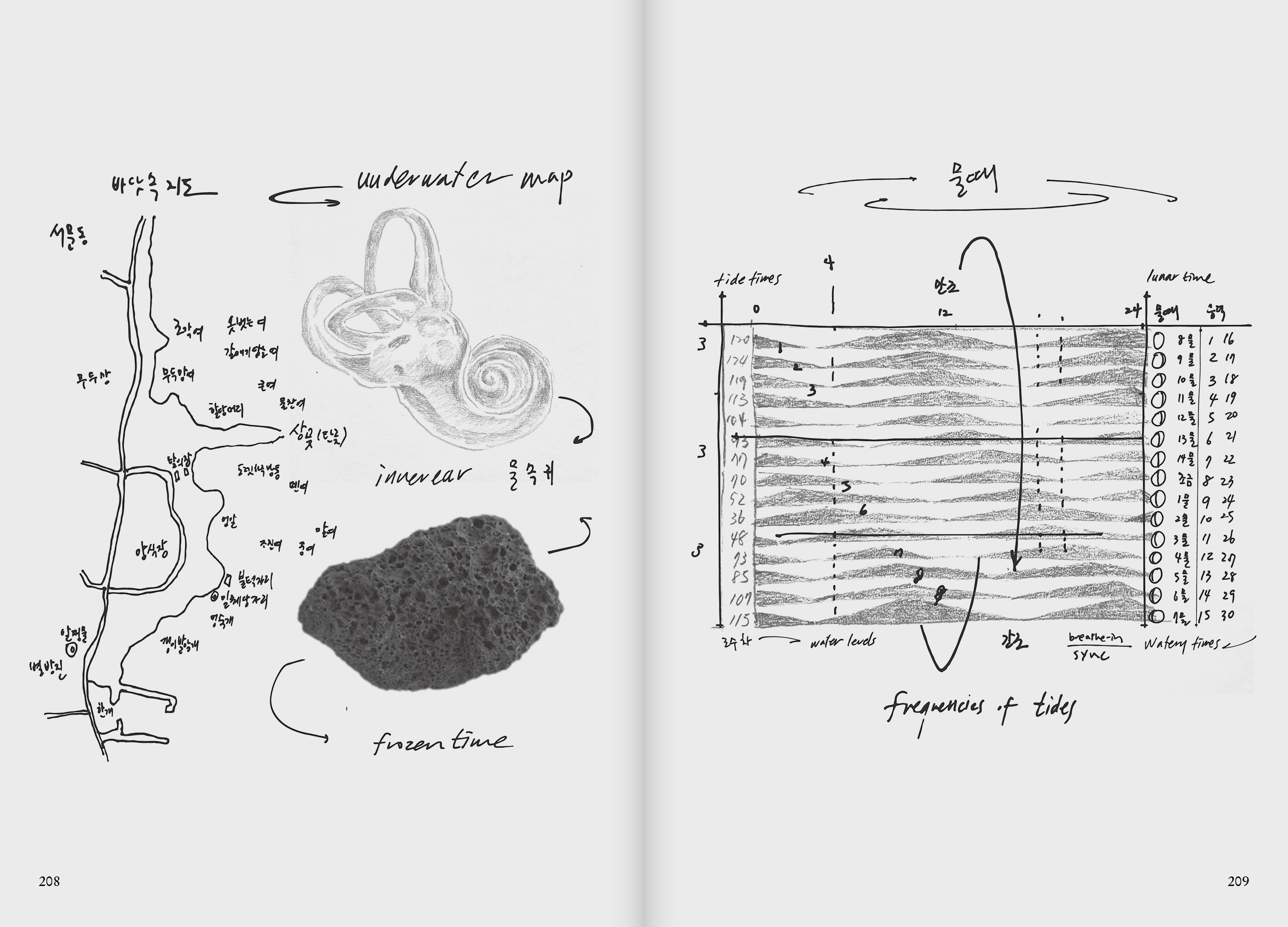
Standing close by the halmoni, I pay attention to her gesture that embodied the geography of the sea. It is the knowledge of the body that experiences and inscribes when quantified language no longer works in the water. The body’s sensations and memories become a map in the water, then transmitted back from words to words. Like learning a foreign language, I slowly learn to read the waves, touch the wind, and watch the flow of water. I sense how to surrender to the ocean and listen to ways of breathing with the ocean. Instead of being swept along by the destructive pace of neoliberalism’s nonstop, fast-paced life, I attune myself at the speed of my body, with my breath, listening to the voices of the world I inhabit. I learn to coexist, not alone, but in relation. (61 page)
My body experiences a crossing of worlds. Everything continues to change, and uncountable things are entangled into one. I ask, “who are ‘we’ when we say ‘we’?” I must take care of the bodies of water and the bodies of more-than-human beings, just as I care for my own body. The reason becomes clear. I start to understand why I feel responsible for the past, present, and future of water and the bodies, why I need time to solely focus on drinking a glass of water, and why I feel compelled to listen to the seaweed, the shellfish, the dolphins, and the haenyeo halmoni living in the sea. I ask myself why I swim. As the reasons become more clear, both love and conflict grow deeper. I sense my position as I swim through the shifting time of the water. I lose my way. Then, I find my way again. (70 page)
About the Artist
Yo-E Ryou
Yo-E Ryou is an artist, educator, and researcher exploring the relationship between water and women’s experiences through a hydrofeminist lens. Currently based on Jeju Island, she engages with the disappearing culture of the haenyeo while learning to swim, dive, and give voice to silenced narratives, experimenting with ‘women’s writing’ across various media. She runs Unlearning Space, an art education and research initiative dedicated to uncovering and interweaving the stories embedded in our bodies. Yo-E studied visual arts and design at Yale University and the Rhode Island School of Design. yoeryou.com
About the authors
Astrida Neimanis
Astrida Neimanis writes at the intersection of feminism and environmental change, with a focus on weather, water, and bodies, and often works in collaboration with artists, scientists, poets, and teachers across various communities. They currently live and work on unceded syilx territories, where they are Associate Professor and Canada Research Chair in Feminist Environmental Humanities at The University of British Columbia Okanagan, and Director of the FEELed Lab.
Chus Martínez
Born in Spain, Chus Martínez has a background in philosophy and art history. She is currently Head of the Institute Art Gender Nature at Basel Academy of Art and Design FHNW; Associate Curator at TBA21–Academy, headquartered in Madrid; and Curator-at-Large of the Vulsat Foundation, Istanbul. Martínez has held leadership positions at art institutions across the world, including Chief Curator, El Museo del Barrio, New York; Head of Department, documenta 13, Kassel; Chief Curator, Museu d’Art Contemporani de Barcelona; Director, Frankfurter Kunstverein; and Artistic Director, Sala Rekelde, Bilbao. In 2021–2022 she was Curator of TBA21–Academy’s Ocean Space in Venice, Italy. Her curatorial projects in 2023 include Living in Joy at Art Sonje Center, Seoul. She is currently the artistic director of the 36th Ljubljana Biennale of Graphic Arts.
Hyosil Yang
Hyosil Yang is currently a lecturer at Seoul National University and Korea National University of Arts. Main Concerns of Yang’s Art Writing and Practices are Feminism, Queer Studies, and Girl Affects. Yang translated Judith Butler’s Notes Toward a Performative Theory of Assembly (2020), Parting ways: Jewishness and the Critique of Zionism (2016), Giving an Account of Oneself: A Critique of Ethical Violence (2013) and Precarious Life (2008) into Korean.
Her Published Works include Crippling Life, Words of Love (2017), and Imagination Against Power, Chronology of Cultural Movements (2015). She participated in several collections of criticisms as an art critic, concerning contemporary Korean artists such as Im Heungsoon, Bahc Yiso, Hague Yang, and Ahn Eun-mi.
Jiseung Kim
Jiseung Kim has studied literature, cultural theory, and psychoanalysis, conducting personal research and art classes focused on feminine writing and various women’s narratives. She is particularly interested in the humor and sharp wit of elderly women. Currently, she engages in interdisciplinary collaborations, lectures, and writing activities. Her published works include 100-Year Classes, Anyway, Pencil, Beast Diary, and Changing the Seeker.
Ji Yoon Yang
Ji Yoon Yang is the director of Alternative Space Loop and Sound Art Korea. After participating in the curatorial program at the Amsterdam De Appel Art Center, she worked as the director of Corner Art Space and the chief curator of Mimesis Art Museum. Since 2007, she has been directing Sound Effect Seoul: Seoul International Sound Art Festival with Baruch Gottlieb. She explores issues in visual culture that expand the scope of existing contemporary art. She has a steady interest in implementing these issues through public communication using radio, the Internet, and social media.